
EES & ETIAS in 2026: What UK Travellers to Paris Really Need to Know
Europe’s new biometric border system is now live — and it’s reshaping arrivals at Paris CDG and Orly. Here’s the plain-English version, plus how to avoid losing the first hours of your trip in a queue.
If you’re flying from the UK to Paris this year, two acronyms now matter more than your boarding pass: EES and ETIAS. One is already live and is currently the single biggest cause of arrival delays at Paris airports. The other arrives later in 2026. Confusingly, they’re often mentioned in the same breath — but they are not the same thing, and only one of them needs your attention right now.
This guide breaks down exactly what each system is, what changed for British passport holders post-Brexit, what the queues actually look like at Charles de Gaulle today, and the practical steps that keep your arrival smooth.
1. What is the EES (and why is it slowing everything down)?
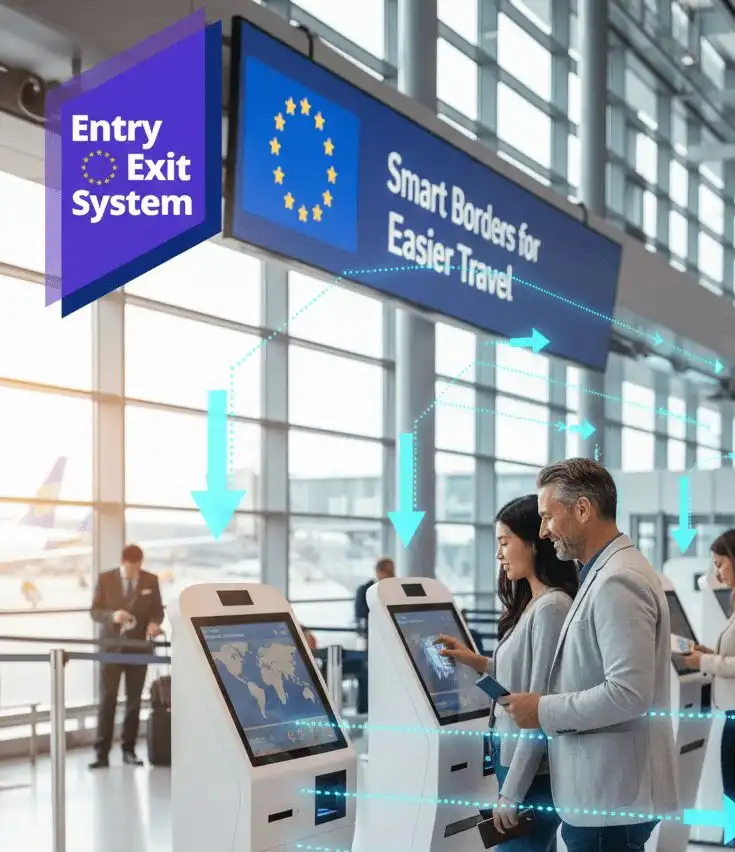
The Entry/Exit System (EES) is the EU’s new digital border database. It replaces the old passport stamp. Instead of an officer inking your passport, the system records four things the first time you cross an external Schengen border: a scan of your passport, a digital photo of your face, four fingerprints, and a timestamp. That record is then kept for three years and reused on future trips.
After a phased rollout that began in October 2025, EES became fully operational across all 29 Schengen-area countries on 10 April 2026. As a British passport holder, you’re now classed as a non-EU “third-country national” — which means you go through this registration, just like travellers from the US, Canada or Australia.
In theory, EES is faster than stamping once you’re already in the database. In practice, the first registration takes a few minutes per person, and at a hub the size of CDG — where ten long-haul aircraft can land in the same hour — that becomes a serious bottleneck. The result has been widely reported queues of two to three hours at peak times, occasionally worse on the busiest mornings.
The Parafe e-gate catch for UK passports
France’s automated Parafe e-gates — the fast lanes EU passengers breeze through — were not configured to handle the first EES registration for UK passports during the early rollout. For your initial biometric capture you’ll generally need a staffed kiosk or manual lane. On later trips within the three-year window, re-entry becomes a quicker face check rather than the full enrolment.
2. What is ETIAS — and do you need it yet?
ETIAS — the European Travel Information and Authorisation System — is a separate thing entirely. It’s not a border check and not a visa. It’s an online pre-travel authorisation you apply for before you fly, similar to the USA’s ESTA or the UK’s own ETA. You fill in a form, pay a fee, and it’s linked to your passport.
Important: ETIAS is not live yet
As of mid-2026, ETIAS is not operational. It’s expected to launch in the last quarter of 2026, followed by a transitional period during which travel without it is still permitted. The fee is set at €20 (free for under-18s and over-70s), and once issued it’s valid for three years or until your passport expires. You cannot apply yet — any website claiming to sell you an ETIAS today is fraudulent. The only official channel is the EU’s own travel portal.
The short version: don’t worry about ETIAS for a trip in 2026. When it does go live, applying takes minutes from home. EES is the one happening at the border right now.
3. EES vs ETIAS: the simple difference
| EES | ETIAS | |
|---|---|---|
| What it is | Biometric registration at the border | Online pre-travel authorisation |
| Where | At the airport on arrival | Online, before you fly |
| Status | Live since 10 April 2026 | Expected late 2026 |
| Cost | Free | €20 (some exemptions) |
| Action needed now | Allow extra time at the border | None yet |
4. The reality at Paris CDG & Orly right now
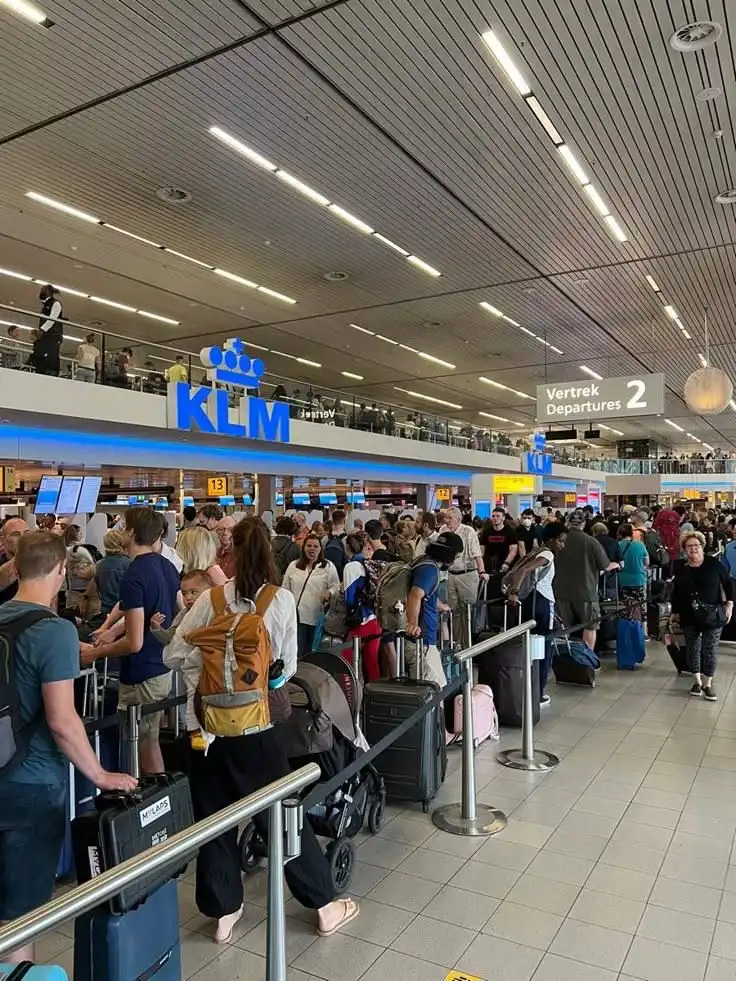
Let’s be honest about what’s actually happening on the ground, because it affects how you plan your arrival. Since EES went fully live, Charles de Gaulle — Terminal 2E in particular, which receives most UK and long-haul arrivals — has seen non-EU travellers funnelled into manual lanes that were never designed for the volume. Wait times at passport control have regularly run to two or three hours during the busy morning banks, with worse peaks reported on the most congested days.
A few practical truths follow from this:
- A 90-minute connection is now risky if you’re clearing immigration at CDG for the first time this year. Build in far more buffer for separate-ticket itineraries.
- Departure queues can be long too. The exit side of EES also takes time — get to passport control well before your gate is called, not after.
- The morning wave is the worst. Early arrivals from the Americas, Asia and the Gulf land together and hit the same kiosks at once.
None of this should put you off Paris — the city is having one of its strongest tourism years on record. It just means the smart move is to plan the first 90 minutes on the ground rather than wing it.
5. How to prepare before you fly
Quick checklist for UK travellers
- Check your passport has a biometric chip. EES kiosks read it; older non-chip passports mean slower manual registration.
- Have your passport chip-side accessible and your trip details (return ticket, accommodation) to hand — French border officers may ask.
- Travelling with children? Under-6s are exempt from fingerprinting; 6–11s may give prints but it isn’t mandated. Facial images are still captured.
- Don’t queue for the e-gates on your first EES trip — head to the staffed “all passports” lane for your initial registration.
- Pre-book your onward transfer so a driver is waiting regardless of how long the border takes — see below.
The one buffer that always pays off
Whatever your plan, give yourself a generous time cushion between landing and anything that can’t wait — a train, a meeting, a dinner reservation. With EES, the old “30 minutes for immigration” assumption no longer holds at Paris airports.

6. How a private transfer changes your arrival
The EES queue itself is a government process — no transfer service can skip biometric registration for you. What a private transfer does remove is everything that usually compounds the stress after the border: the scramble for a taxi rank, the surge-priced rideshare, the confusion of the RER with luggage and tired children.
With Go Paris Transfer, your driver tracks your flight. If the EES queue runs long, they wait — no extra panic, no penalty, no re-booking. You walk out of arrivals to a chauffeur holding your name, step into a clean Mercedes, and head straight into Paris at a fixed price agreed in advance. No meter, no surge.
| Option | Price certainty | Waits for delayed arrival? | Help with luggage |
|---|---|---|---|
| Private transfer (GPT) | Fixed, agreed upfront | Yes — flight tracked | Yes, door to door |
| Taxi rank | Metered + possible surcharge | No | Limited |
| Rideshare app | Surge pricing at peaks | No | Limited |
| RER train | Cheapest | No | None — stairs & changes |
Land, breathe, and let us handle the rest
Fixed prices, flight tracking, and a driver who waits — even through the EES queue.
Book your Paris transfer →7. Frequently asked questions
Do UK citizens need ETIAS to visit Paris in 2026?
Not yet. ETIAS is expected to launch in the last quarter of 2026, with a transitional grace period afterwards during which you can still travel without it. You cannot apply for an ETIAS today, and any site claiming to issue one now is fraudulent.
What is the difference between EES and ETIAS?
EES is a biometric registration carried out at the border when you arrive (live since April 2026). ETIAS is an online authorisation you’ll apply for from home before travelling (expected late 2026). EES is the one affecting Paris arrivals right now.
How long are the EES queues at Paris CDG?
Reported peak waits at passport control have regularly reached two to three hours since EES went fully live, heaviest during the early-morning long-haul arrival bank. Times vary by terminal, day and how many kiosks are open.
Can a private transfer skip the EES queue?
No service can bypass biometric registration — it’s a mandatory government process. A private transfer removes the stress after the border: your driver tracks your flight and waits, so a long queue doesn’t cost you your ride or trigger surge pricing.
Do I need to register for EES every time I visit?
No. Your biometric record lasts three years. The first crossing is the full registration; later entries within that window are a faster face check.